

Material guide
The Best Materials for Outdoor Signs
There is no single best material for every sign. The right choice depends on exposure, size, mounting, design detail, desired appearance, maintenance expectations and budget.
Expert guidance
What you should know
There is no single best material for every sign. The right choice depends on exposure, size, mounting, design detail, desired appearance, maintenance expectations and budget.
Start with the environment
A covered porch, full-sun fence, coastal storefront and pool bar expose a sign to very different combinations of ultraviolet light, water, heat, salt and wind. Material recommendations should begin with placement.
MDO
MDO is our preferred wood-based panel for many painted backyard signs because it is rigid, flat, paint-friendly and visually distinctive when the carved edge reveals its layers. It must be thoroughly sealed.
Cellular PVC
PVC is the low-maintenance choice for wet locations. It machines cleanly and cannot rot, though large signs may need additional support and dark colors in intense sun require careful planning.
Maker’s advice: Send us a photo of the installation area, finished dimensions and exposure details. Material and design recommendations are much more accurate when we can see the actual space.
Other useful materials
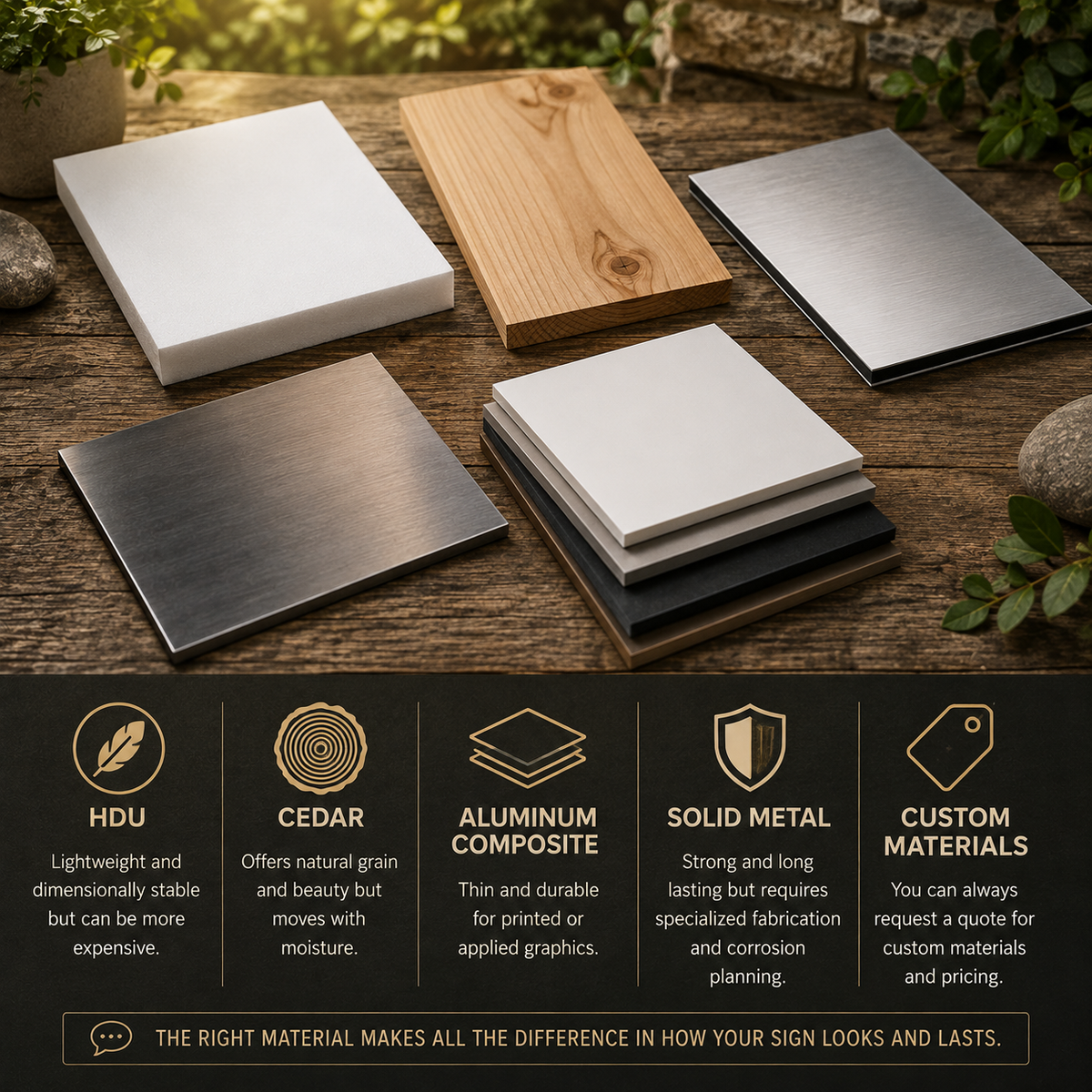
HDU is lightweight and dimensionally stable but can be more expensive. Cedar offers natural grain but moves with moisture. Aluminum composite is thin and durable for printed or applied graphics. Solid metal is strong but requires specialized fabrication and corrosion planning. You can always Request a Quote for materials not listed on our site.
Quick comparison
At-a-glance comparison
Use this table as a starting point. Your finished size, exposure and installation can change the recommendation.
| Material | Main strength | Watch for |
|---|---|---|
| MDO | Rigid, smooth painted face, layered edge | Seal every face and routed edge |
| PVC | Moisture resistance and no wood rot | Support large spans; heat from dark colors |
| HDU | Stable, lightweight, excellent carving | Higher material cost |
| Cedar | Natural grain and traditional appearance | Movement, checking and regular maintenance |
Planning details
Put the advice into practice
Strong outdoor signs come from combining the right material, readable design, compatible finish and secure installation.
Match the material to the design
Deep carving, fine lettering, broad unsupported spans and shaped silhouettes place different demands on a substrate. The design should be engineered with the material rather than forced onto it.
Common questions
Frequently asked questions
What is the best material for a pool sign?
Cellular PVC is often the first choice when frequent splash and humidity are expected.
What is the best value for a backyard sign?
Properly finished MDO offers an excellent balance of rigidity, appearance and cost.
Is cedar always better because it is real wood?
No. Cedar has attractive grain, but engineered MDO is often flatter and more predictable for painted routed signs.
Can you recommend a material from a photo?
Yes. A photo, dimensions and exposure details help us make a project-specific recommendation.
Ready to plan your custom sign?
Tell us where the sign will be installed, how large it needs to be and what style you have in mind. We will help match the material and design to the project.