

Material comparison
MDO vs. PVC Signs: Which Material Is Better?
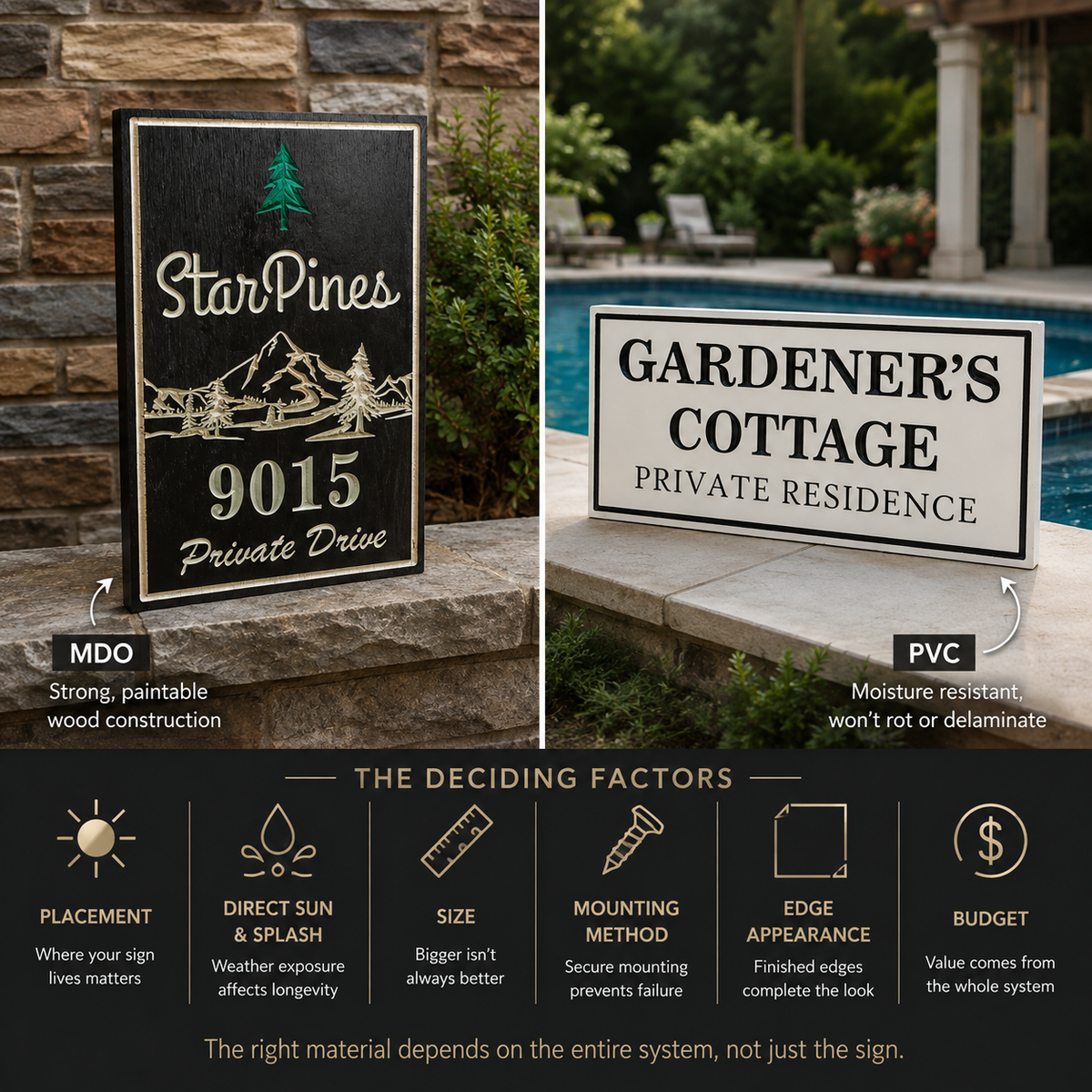
Both materials can make an excellent outdoor sign, but they solve different problems. MDO offers rigid, layered wood construction and a smooth painted face; PVC offers maximum moisture resistance and cannot rot like wood.
Expert guidance
What you should know
Both materials can make an excellent outdoor sign, but they solve different problems. MDO offers rigid, layered wood construction and a smooth painted face; PVC offers maximum moisture resistance and cannot rot like wood.
The practical answer
Choose MDO when you want a strong wood-based panel, crisp carving, attractive exposed laminations and excellent value. Choose PVC when the sign will face frequent water, coastal humidity or when avoiding wood rot is the highest priority.
Why MDO performs well
Exterior-grade MDO is a plywood panel faced with a resin-treated overlay. Cross-laminated veneers provide stiffness, while the smooth face accepts paint well. Every routed edge must be prepared and sealed because carving exposes the wood layers.
Why PVC performs well
Cellular PVC is uniform, machines cleanly and absorbs very little water. It is especially useful around pools, sprinklers and damp locations. Large unsupported PVC signs may require thoughtful thickness or reinforcement because it is less rigid than plywood.
Maker’s advice: Send us a photo of the installation area, finished dimensions and exposure details. Material and design recommendations are much more accurate when we can see the actual space.
Dedicated to customer satisfaction
The deciding factors
Placement, direct sun, expected splash, size, mounting method, desired edge appearance and budget matter more than choosing a universal winner. A protected MDO sign may outlast a poorly mounted PVC sign because construction and installation remain part of the system.
Quick comparison
Core
Use this table as a starting point. Your finished size, exposure and installation can change the recommendation.
| Core | Cross-laminated wood veneers | Cellular polyvinyl chloride |
|---|---|---|
| Water behavior | Exterior capable when completely sealed | Will not rot or absorb water like wood |
| Rigidity | Excellent for broad panels | Good; large spans may need support |
| Visual character | Layered wood edge | Clean and uniform |
| Best use | Patios, garages, family and fire-pit signs | Pools, coastal areas and wet exposure |
Planning details
Put the advice into practice
Strong outdoor signs come from combining the right material, readable design, compatible finish and secure installation.
Make the decision project-specific
Use the article as a framework, then evaluate the actual location, size and installation before choosing a final specification.
Common questions
Frequently asked questions
Is MDO the same as MDF?
No. MDO is plywood with an exterior overlay; MDF is fiberboard and is generally associated with interior applications.
Is PVC maintenance-free?
The base cannot rot like wood, but paint and hardware still need cleaning and inspection.
Which is better near a pool?
PVC is usually the safer choice for frequent splash or sprinkler exposure. Covered pool bars may also be suitable for properly sealed MDO.
Can both materials be painted?
Yes. Each requires compatible preparation, primer and exterior coatings.
Ready to plan your custom sign?
Tell us where the sign will be installed, how large it needs to be and what style you have in mind. We will help match the material and design to the project.